Question the Rule of Thirds
From the archive
This article was originally published in 2009. Some photographs from this period were prepared at lower resolutions for the web and may appear softer or pixelated on modern screens.
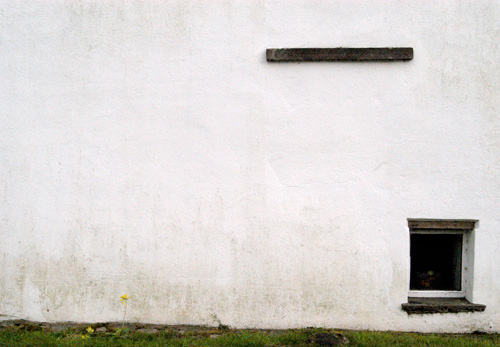
There is a lot written about the rules of thirds on the Internet as an aid to photographic composition, much of it giving sound advice with regard to applying the rule, its origins and the fact that it must not be seen as the ‘holy grail’ for the creation of fine images.
There is certainly a danger in following such rules, the creative freedom disappears and a plethora of predictable images swamp the magazines, industry and the amateur sections of photography, such as clubs and societies. The first two images here do not conform to the rule and in many ways break all sorts of compositional guides. They would not win any camera club competitions yet they are graphically strong photographs.
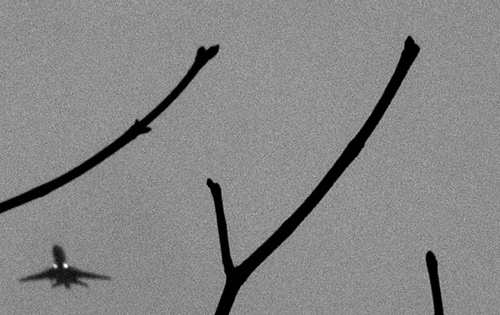
The golden mean (from whence comes the rule of thirds) and its appearance within the natural world is certainly a fascinating area of study. Its further application in the arts is well established, from the Greeks to modern times and it also professes to find a home in literature and music. The mathematical basis of its construction, based on the Fibonacci numbers and phi and Phi is remarkable. Yet all of this should not force the construction or composition of an image.

Two artists, one from the world of painting and the other from photography helped me to understand, at an early age, the nature of construction within and beyond the curious entity known as the frame.
I remember when I was 18 going to see a talk in the Walker Art Gallery by the American photographer Ralph Gibson. It was the moment I really knew I wanted to work with this peculiar medium. His photographs didn’t follow rules and there were no preconceptions in his image construction.
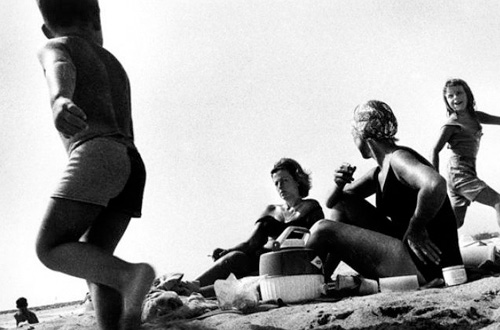
Ralph Gibson
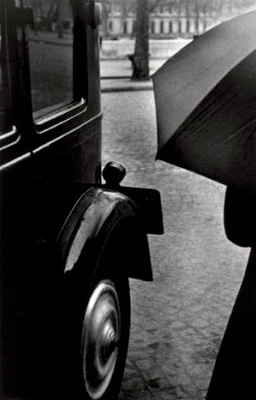
Ralph Gibson
The other artist I was heavily influenced by was Edgar Degas. He used photographs as studies for much of his paintings and many show a willingness to acknowledge what lies beyond the frame. People are placed on the very edge of the canvas, space appears in areas that traditionally would have been considered too important for ‘nothing.’
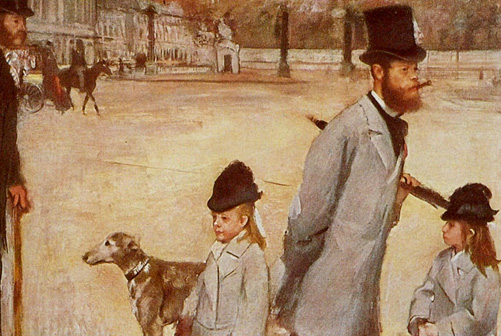
Edgar Degas - Place de la Concord 1875
I realized then that the frame was not the place where everything has to occur, and that there should certainly be no rules in image construction within the constraints of a frame. Photography must not be prescriptive and whist an understanding of the history and theory of composition can offer possibilities and certainly should be explored, it must not be taken as ‘gospel’
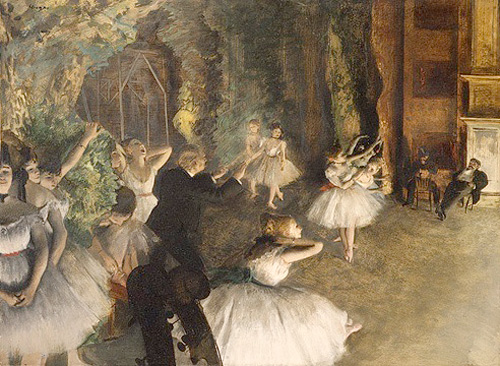
Edgar Degas - Ballet Dancers on the Stage 1883
Splitting the image into nine equally spaced rectangles, (as occurs with the rule of thirds – the points of intersection being central to the ‘rule) can, however, have one huge benefit. When taking a photograph it is essential that all parts of the frame are taken into account. So often the peripheral areas are ignored during the taking process only to come back to haunt projected or printed images. The photographic recording process is indiscriminate, unlike the eye and brain. Imagining your frame split into nine areas ensures that you will, at the very least, consider each area and therefore extend the normal process of looking through a viewfinder and this will certainly result in stronger image construction.
0 comments
Hi Tim
Once again a big thank you for an excelent day today at the Llanelli Wetlands Centre, picked up a lot of knowledge about the use of Photoshop, below is the comment Malcom sent out to members after your Black and White master class last Thursday.
Regards
Trevor Owen
Dear Members
Another excellent night at the Club, Tim Collier, degree lecturer in photography gave a superb talk on enviromental photography reaching back to his past projects in isolated Welsh farming communities and Tramp Steamers, all black and white taken in natural light. Tim, in his quiet and unassuming presentation manner, held us spellbound for the evening leaving some of us with the desire to return albeit briefly to the traditional darkroom. Thank you Tim.
I did mention a little known event that takes place about the end of July, it is the St. Mary Hill Charter Fair, ‘Travelers’ from all over the UK and Ireland visit to sell almost every living thing from horses to snakes, (take a small compact camera and leave your wallet at home) it’s good fun let you know more nearer the time.
See you soon
Mal