Club Competitions: Good or Bad?
From the archive
This article was originally published in 2009. Some photographs from this period were prepared at lower resolutions for the web and may appear softer or pixelated on modern screens.
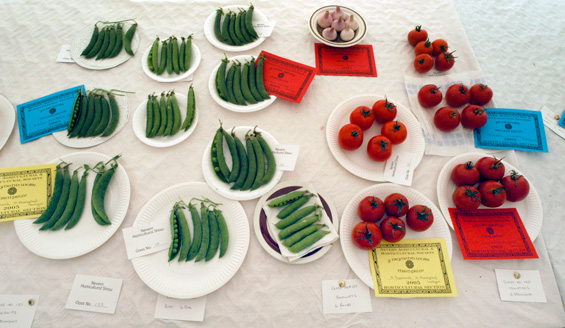
Last night I gave a presentation on environmental portraiture to The Porthcawl and Pyle Photographic Society. During the evening a couple of questions were raised about how a judge would respond to a number of the images I was showing.
I find I’m frequently being questioned in this fashion, having talked to a good number of clubs on a wide variety of subjects over the last year or so.
It’s a little worrying that within the club world there appears to be a fairly tight and at times narrow view about the construction and content of an image. Comments such as ‘…..but if you put that in front of a judge it would be rejected’ are often levelled at the work, yet it is not a criticism of the images themselves, which are more often than not enjoyed as being ‘fresh’, but more a statement of fact.
I would advise people to photograph for themselves and not for judges. The classic rules within art and photography are certainly worth exploring but not to hold as a holy grail for the production of fine images.
If we all photographed to prescription it would be a boring world of predictable images that would, by definition, deny creativity. We must embrace and explore new ways of image construction and aim to create a unique vision, our vision, of the world. Photography is a complex area of study that functions on many levels, often beyond the pure aesthetic. We must be willing to question both modes of representation and the formal methods by which the illusion of the photograph is generated.
I can appreciate how the competition environment can generate a healthy rivalry between clubs and act as a cohesive element within the framework of the Federation but I worry about its narrowness in promoting a new way of seeing.
It would be interesting to get some feedback in the comments from club members, judges and anyone else about how they feel about this.
Comment Away!
0 comments
Good point Tim, photography is so subjective that there never is ” a perfect way to photograph something “. looking at the principles of photography/design is always a good place to start when beginning with photography but you will soon move far beyond that when stretching the medium to its limits (if it has any that is)
An interesting blog Tim (not that your others aren’t).
Like you I feel that camera clubs do a good job in providing and promoting a framework for those interested in photography. It allows members to meet like-minded people, which in turn can certainly help to keep your enthusiasm topped up in times of need.
I also have to agree with you that there is a narrowness that develops within camera club photography which while not specifically intended, does exist. The interesting issue is how this has come about and whether there is a will or need to break this mould?
The all too often seen scenario is this. When joining a club the newcomer becomes aware that the cornerstone event of the calendar is the monthly competition, which does indeed fill a worthy role in allowing members to showcase their work.
At first the novice enters photographs of subjects that are of interests to them, but as they progress their skills they become seduced into the idea of improving their scores, which for some becomes the all encompassing purpose of the event.
The danger here is that this fixation upon the score can result with photographers pursuing subjects and approaches that they think will appeal to the club judges in the hope of that ultimate accolade of the ‘20’! Don’t get me wrong. It’s nice to get appreciation for your imagery but there’s more to photography than one judge anointing you with you top marks.
However, there is another side to this point. There seems to be almost an unwritten expectation by clubs and their members that judges will critique the work to non-stated but nevertheless inferred set of parameters that have been passed down by word of mouth over the years. The outcome is that there is often the case that members, without realising it, produce work to a formula that they think will please judges while in turn many judges respond in this symbiotic relationship by critiquing work to the same perceived formula which the audience can digest. And so the wheel goes around. The result of this inertia is that expectations are met and delivered by both parties, everyone feels cosy, but with the outcome being, as you wrote, “a fairly tight and at times narrow view about the construction and content of an image”.
Do clubs or their members want anything other than formulaic marking? I don’t know. Some certainly do, but then I have heard time and again comments along the lines of “It only got 14. Last months judge gave it 20”. The emphasis once again on chasing marks.
Can this narrowness of view be broadened? Yes, but only when people come to realise or show the confidence to produce imagery that represents what they want to say with their work, rather than continue chasing marks that in a year’s time will have lost all meaning.
Thanks Gary. An interesting take and perhaps a topic that needs airing in some more formal arena than on this blog. I feel it needs to come from the members in the first instance. If my observations are correct, and it seems to be backed up by your comments, then more folk need to become vocal at club level.
Perhaps the judging criteria needs to be re-assessed, and be framed so as to allow for more individual personal expression and to acknowledge the many differing approaches to a continually changing medium?
We are, as lecturers, always judging work, it’s how grades are arrived at, but within the criteria we grade to there is wide enough scope to assess and grade many aspects of the work. Photography functions on many levels and perhaps it’s this that’s not reflected within the club world.